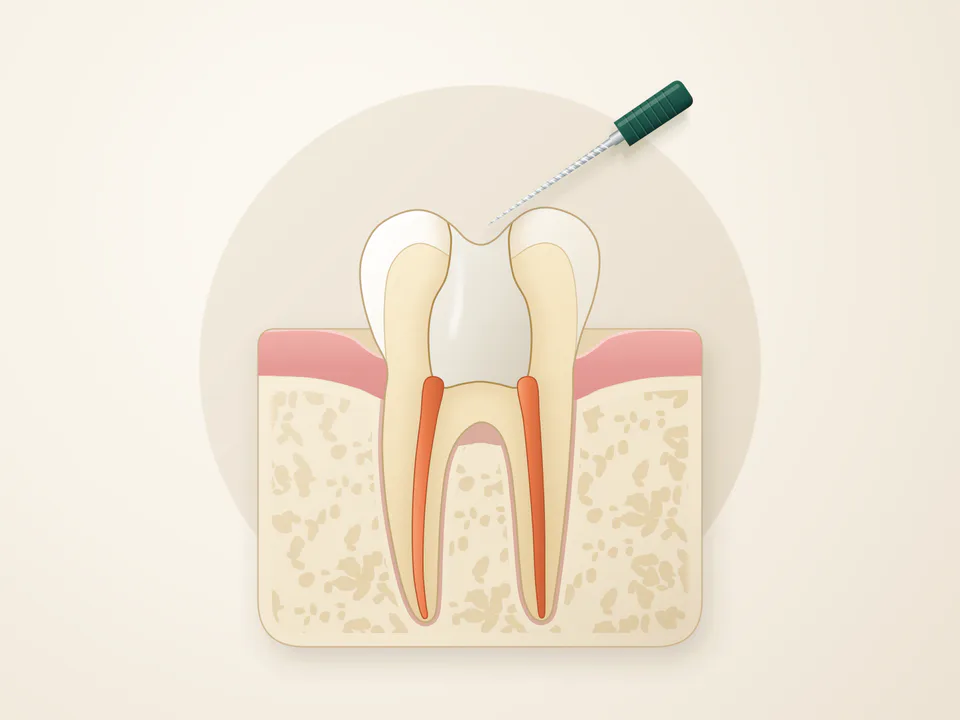
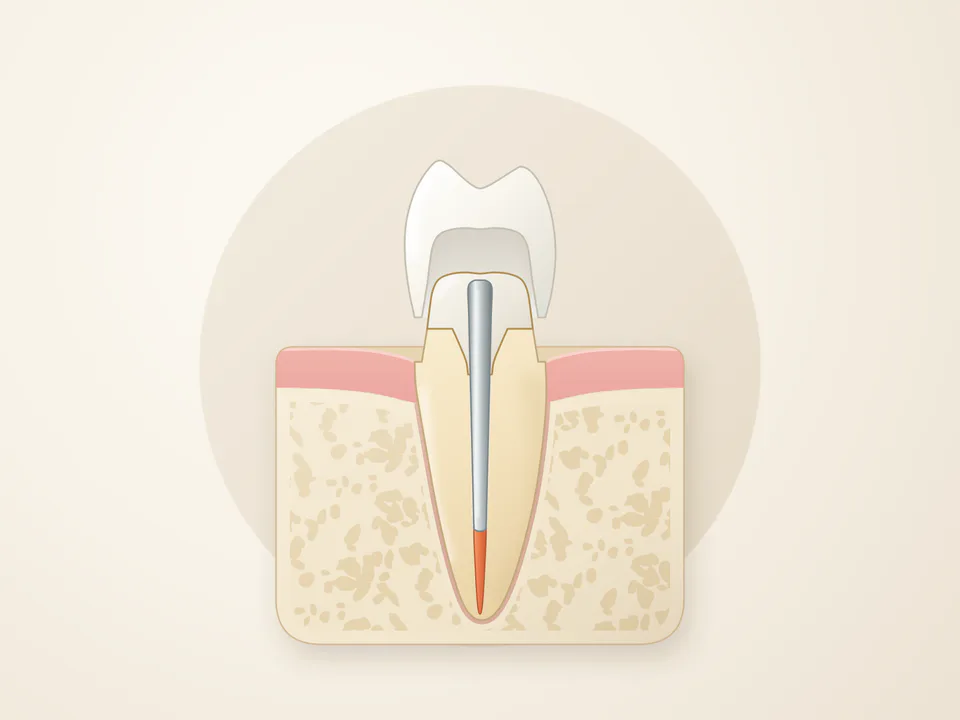
After root canal treatment, a tooth often needs a crown to protect it. But if decay or a break has destroyed most of the tooth above the gum, there may not be enough left for a crown to hold on to. A post and core rebuilds the tooth from the inside so that a crown can be fitted.
At Divine Dental Care in Ankleshwar, the dentist first checks how much healthy tooth is left and whether the root is strong enough. Many root-canal-treated teeth do not need a post at all.
What the treatment involves
A post and core has two parts:
- The post – a thin rod fixed into the upper part of the sealed root canal to anchor the core
- The core – a build-up that replaces the missing part of the tooth and gives the crown a firm base
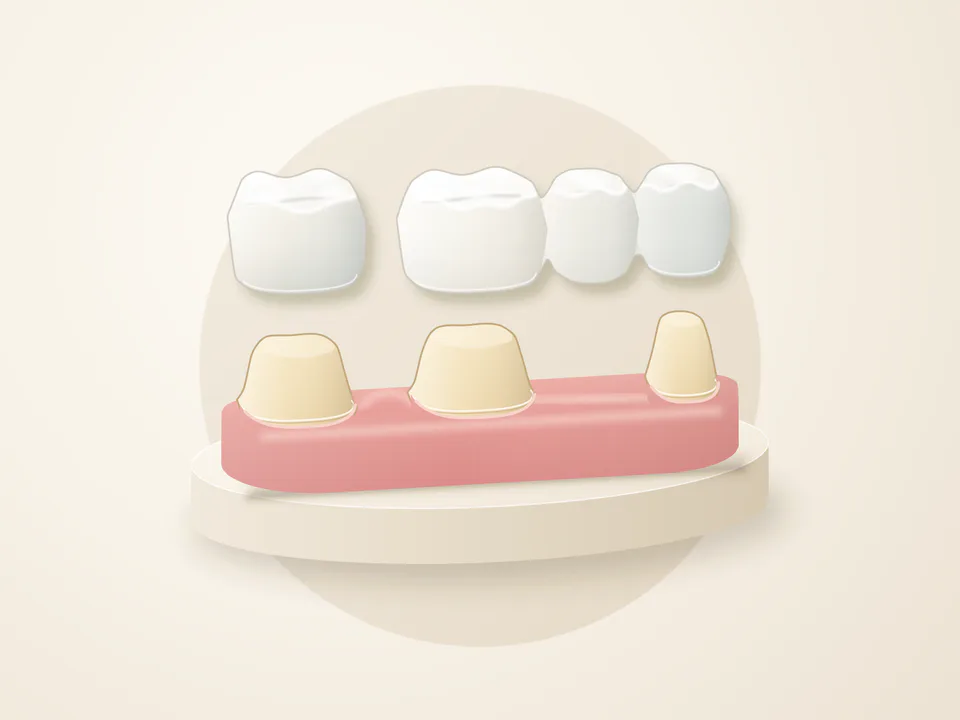
A crown then covers the core. It is the crown, not the post, that protects the tooth when you chew.
There are two main kinds, and the dentist explains which suits your tooth:
- Ready-made posts – for example fibre or metal, cemented into the root with the core built up around them
- Cast post and core – made in one piece in a dental laboratory to fit your root
When it is recommended – and when it is not
A post and core may be suggested for a root-canal-treated tooth when:
- most of the visible tooth has broken off or decayed away
- a large old filling has failed and little tooth remains around it
- a front tooth has broken close to the gum
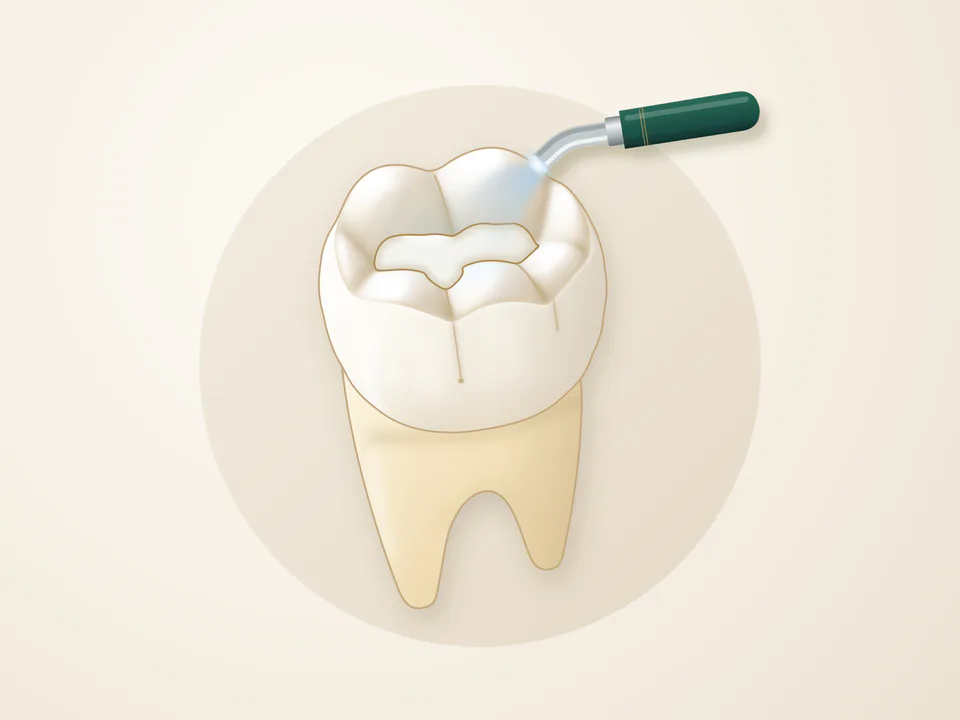
If enough healthy tooth remains, a post is not needed: the tooth can usually be rebuilt with a core or filling alone. Back teeth often have a large space inside (the pulp chamber) that can hold a core without a post.
If the root is cracked, very short, decayed far below the gum or loose because of gum disease, the dentist may instead discuss tooth extraction and replacing the tooth with a dental implant, bridge or denture.
Benefits of a post and core
- It can save a natural tooth that would otherwise be too broken down to crown.
- It gives the crown a stable base, so you can chew on the tooth again.
- Keeping your own tooth can avoid the need for an implant, bridge or denture.
- Your own root stays in the jaw, helping to keep the bone and gum around it.
How the treatment works at Divine Dental Care
- Examination and X-ray. The dentist checks the tooth, gum and root filling, usually with a low-radiation digital X-ray.
- Explaining your options. You are told whether a post is needed, which type, and roughly how many visits it may take. You decide how to proceed.
- Preparing the space. The area may be numbed with local anaesthetic. Part of the root filling is removed from the upper canal, leaving enough at the tip to keep the seal.
- Fitting the post. A ready-made post is cemented and the core built up around it, often at the same visit. A cast post and core is made from an impression and cemented at the next visit, with a temporary in between.
- The crown. The tooth is prepared for a metal, ceramic or zirconia crown, with a temporary crown until the final one is fitted.
Risks and limits
- Root damage. A tooth that has lost most of its crown is weaker, and the root can crack under heavy biting or grinding; a cracked root usually means losing the tooth. Healthy tooth above the gum for the crown to grip lowers this risk. Rarely, the root is damaged while the post space is prepared.
- A sound root canal filling is needed. If it is leaking or infection remains, the root canal may need redoing first.
- Loosening. A post or crown can occasionally come loose and need re-cementing.
- Later retreatment is harder, because the post must be removed first, which carries some risk to the root.
Aftercare and recovery
Wait for any numbness to wear off before eating. Mild tenderness for a few days is common; take only pain relief your doctor or pharmacist says is safe for you.
Until the final crown is fitted, the tooth is fragile. Do not bite on hard things such as supari, bones or ice on that side, avoid sticky food, and do not delay the crown appointment – without it the tooth can break or let bacteria back into the root. If a temporary comes off, keep it and contact the clinic.
Afterwards, brush twice a day with fluoride toothpaste, clean between your teeth and come for regular check-ups. Contact the clinic if the tooth hurts when you bite, the crown feels loose or a pimple-like bump appears on the gum. If swelling spreads towards your eye or neck, or you have a high fever or difficulty breathing or swallowing, go to a hospital emergency department straight away – see emergency dental care. To have a broken tooth assessed, book an appointment at the Ankleshwar clinic.
Frequently asked questions
Does every tooth need a post after root canal treatment?
No. Many root-canal-treated teeth have enough healthy tooth left to be rebuilt with a filling or core alone. A post is used only when the core needs extra hold.
Does a post make the tooth stronger?
No. The post holds the core in place but does not strengthen the root, and making room for it removes some tooth. The crown is what protects the tooth.
Will it hurt?
After root canal treatment the inside of the tooth no longer feels pain, but the gum and the tissue around the root can still feel pressure, so the dentist may use a local anaesthetic. Mild tenderness for a few days is common.
How long does a post and core last?
Many last for years, but none lasts forever. It depends on how much tooth remains, the root canal treatment and crown, your bite and how well you clean around the tooth. Regular check-ups help spot problems early.
Every mouth is different. The right treatment for you is decided only after Dr. Dhara M. Sudani examines your teeth and, if needed, takes an X-ray. This page is general information, not a diagnosis.