
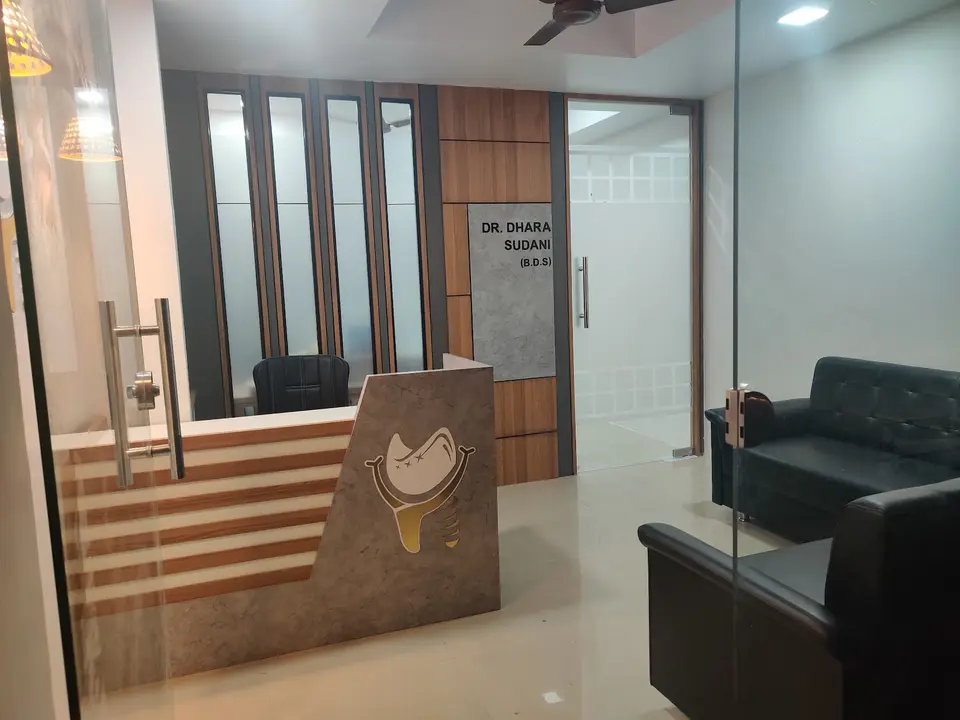
Dental problems rarely come at a convenient time. A sudden toothache, a swollen face, a cracked tooth or a fall that knocks out a front tooth can be worrying, especially when it happens to a child.
Divine Dental Care in Ankleshwar sees dental emergencies during its opening hours, including Sunday mornings. Call or WhatsApp the clinic during opening hours and explain what has happened, and you will be advised whether to come in and how soon. The clinic has no night or after-hours service, so if it is closed and you have any of the warning signs below, go to a hospital emergency department.
What the treatment involves
Emergency dental care aims to relieve pain, control infection and protect the tooth until longer-term treatment can be planned. Depending on the problem, the dentist may:
- clean out an infected tooth to relieve pressure, often as the first stage of root canal treatment
- place a temporary filling or smooth a sharp, broken edge
- put back and stabilise a knocked-out or loosened adult tooth
- remove a tooth that cannot be saved (see tooth extraction)
- decide whether medicines are needed, as antibiotics help only in some situations
Go straight to a hospital emergency department if you have:
- swelling spreading to the eye, neck or under the jaw
- difficulty breathing, swallowing or speaking
- a high fever with a swollen face
- heavy bleeding that will not stop despite firm pressure
- an injury to the face or jaw, or a head injury, for example after a road accident or a fall
The same applies to accidents at work, whether in GIDC Ankleshwar, Panoli or elsewhere: go to a hospital first.
Common reasons patients come in
- Severe or throbbing toothache, especially one that keeps you awake
- Swelling of the gum or face, or a painful abscess
- A broken, chipped or cracked tooth
- A tooth knocked out or pushed out of position by a fall, sport or accident
- A lost filling or crown, or a broken denture
- A painful, swollen gum around a wisdom tooth
How the treatment works at Divine Dental Care
- Call or WhatsApp first. During opening hours, contact the clinic and describe the problem. You will be told whether and when to come in.
- Assessment. The dentist examines the area, takes a low-radiation digital X-ray if needed and explains what has happened.
- Relief first. Treatment focuses on easing pain, controlling infection or protecting the tooth.
- Follow-up plan. Further treatment, such as completing a root canal or making a crown, is planned for a later visit.
What to do before you reach us
Toothache: Rinse your mouth with warm water and gently floss to remove trapped food. Take only pain relief your doctor or pharmacist says is safe for you. Do not put a tablet on the gum next to the tooth, as it can burn the gum.
Swelling: Hold a cold pack wrapped in a cloth against the outside of the cheek for short periods. Do not apply heat, and do not try to burst a swelling.
Broken tooth: Rinse with warm water, keep any broken pieces in a clean container of milk or water and bring them with you. Avoid chewing on that side.
Knocked-out adult tooth:
- Hold the tooth by the crown (the white part), not the root.
- If it is dirty, rinse it briefly in milk or cold running water for a few seconds. Do not scrub it.
- If you can, gently push it back into the socket and bite on a clean cloth to hold it.
- If not, keep it in milk and come to the clinic or a hospital straight away. The sooner it is seen, ideally within an hour, the better its chance.
Knocked-out milk tooth: Do not put a baby tooth back, as this can damage the adult tooth developing underneath. Keep it, comfort your child and contact the clinic. See also children's dental care.
For problems that are uncomfortable but not urgent, such as a small chip, you can book an appointment.
Frequently asked questions
Can I get emergency dental care at night?
The clinic sees emergencies during its opening hours only and has no night service. When the clinic is closed, go to a hospital emergency department for severe pain, swelling, bleeding or injury.
Can a knocked-out tooth be saved?
Sometimes, if it is an adult tooth that is put back or kept in milk and seen quickly. Even then, it will need follow-up and possibly root canal treatment later.
Will I need antibiotics for a tooth infection?
Not always. Antibiotics do not remove the cause of a dental infection, which usually needs dental treatment. The dentist will decide whether you need them.
What should I do if a crown falls out?
Keep the crown safe, avoid chewing on that side and contact the clinic. Do not glue it back on yourself.
Every mouth is different. The right treatment for you is decided only after Dr. Dhara M. Sudani examines your teeth and, if needed, takes an X-ray. This page is general information, not a diagnosis.