
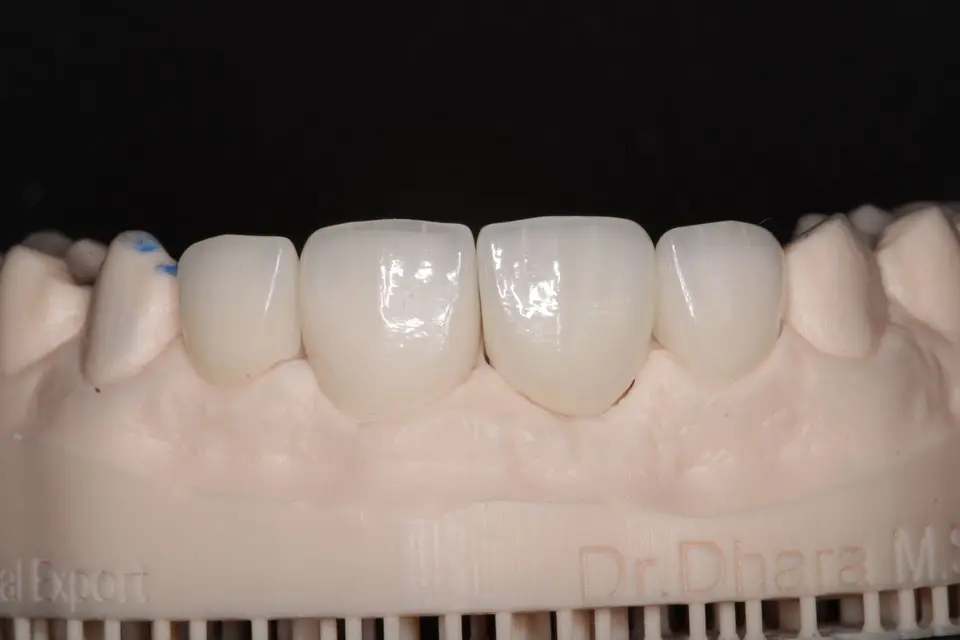
A dental implant replaces the root of a missing tooth. It is a small screw-shaped post, usually made of titanium, that is placed into the jawbone. Over the following months the bone usually bonds with the implant surface, and the implant can then support a crown, a bridge or a denture.
For many people, an implant is a stable way to replace a missing tooth without trimming the healthy teeth next to it. At Divine Dental Care in Ankleshwar, implants are planned carefully: the dentist checks your gums, bone and general health first, explains whether an implant suits you and compares it with other options such as a bridge or denture.
What the treatment involves
An implant has three parts:
- The implant – the post that sits in the bone
- The abutment – a connector that joins the implant to the tooth on top
- The crown, bridge or denture – the visible part, made to match your other teeth as closely as possible
Treatment is usually done in stages. After the implant is placed under local anaesthetic, the bone needs time to heal around it – often a few months. Once healing is complete, the final tooth is attached.
Not everyone has enough bone for an implant, especially if a tooth was lost long ago. Gum health, smoking, uncontrolled diabetes and some medicines can all affect healing. The dentist will discuss whether extra steps such as bone grafting may be needed, or whether another option would suit you better.
Common reasons patients come in
- A single missing tooth, especially in a visible area
- Several missing teeth that could be replaced with an implant-supported bridge
- A loose lower denture that moves while eating or speaking
- A tooth that cannot be saved and will need tooth extraction
- Not wanting healthy neighbouring teeth trimmed for a bridge
- Difficulty chewing because of gaps at the back of the mouth
How the treatment works at Divine Dental Care
- Consultation and examination. The dentist checks the gap, the neighbouring teeth, your gums and your bite, and asks about your medical history and medicines.
- X-rays and planning. Digital X-rays help assess the bone. Some cases also need a 3D scan (CBCT) to measure the bone and locate nerves and sinuses; the dentist will tell you if this is needed and where it can be done.
- Explaining the plan. You are told how many stages are likely, the expected healing time, the alternatives and what each involves, before you decide.
- Placing the implant. Under local anaesthetic, the implant is placed into the bone, and the gum may be closed with stitches.
- Healing and review. The bone heals around the implant over a period of months, with review visits to check progress.
- Fitting the final tooth. Impressions are taken, and the crown, bridge or denture is made and fitted on the implant.
Aftercare and recovery
After the implant is placed, some swelling, mild bruising and discomfort for a few days are common. The dentist will give you instructions, which usually include eating soft food, not chewing on the area, not smoking and keeping the mouth clean as advised. Take only pain relief your doctor or pharmacist says is safe for you, and any medicines exactly as the dentist prescribes.
Once the final tooth is fitted, look after it like a natural tooth: brush twice a day, clean around the implant with floss or small interdental brushes, and keep up regular check-ups. Infection of the gum and bone around an implant (peri-implantitis) can develop without good cleaning, and smoking raises the risk. When you are ready, book an appointment for an implant consultation at the Ankleshwar clinic.
Frequently asked questions
Am I suitable for a dental implant?
Many adults with healthy gums and enough jawbone can be considered, but the dentist decides after examining you and reviewing X-rays. Uncontrolled diabetes, smoking, some medicines and gum disease can affect suitability or need attention first.
How long does the whole process take?
It varies. The bone usually needs a few months to heal around the implant before the final tooth is fitted, and longer if bone grafting is needed. The dentist will give you an estimate for your case.
Is implant surgery painful?
The area is numbed with local anaesthetic, so you usually feel pressure rather than pain during the procedure. Some soreness and swelling for a few days afterwards are common.
How long do implants last?
With good cleaning, regular check-ups and no smoking, implants can last many years. The crown on top may wear and need replacing over time, and no dentist can promise that an implant will last for life.
What if I cannot have an implant?
A bridge or a partial or complete denture can also replace missing teeth. The dentist will explain the advantages and limits of each.
Every mouth is different. The right treatment for you is decided only after Dr. Dhara M. Sudani examines your teeth and, if needed, takes an X-ray. This page is general information, not a diagnosis.