
Wisdom teeth are the last molars to come through, usually between the late teens and mid-twenties. Many people have no trouble with them. In others, there is not enough room in the jaw, and a wisdom tooth comes through only partly, at an angle, or stays trapped under the gum or bone. This is called an impacted wisdom tooth.
A wisdom tooth does not need to be removed just because it is there. At Divine Dental Care in Ankleshwar, the dentist first assesses the tooth with an examination and an X-ray, explains what is happening and talks you through your options before anything is decided.
What the treatment involves
The X-ray shows the position of the wisdom tooth, the shape of its roots and how close it is to the nerve in the lower jaw or the sinus above the upper teeth. Depending on what it shows, the dentist may suggest:
- Watching the tooth if it is not causing problems
- Treating a gum infection around a partly erupted tooth
- Removing the tooth under local anaesthetic, if it can be reached easily
- A surgical removal, where a small cut in the gum is needed, and sometimes removal of a little bone or dividing the tooth into pieces
If the tooth sits in a complex position, for example deep in the bone or very close to the nerve, the dentist will explain the options, which may include a further scan or seeing an oral surgeon.
Before removal, tell the dentist about your medicines and health conditions, including blood thinners, diabetes and pregnancy. If a wisdom tooth is bothering you, book an appointment for an assessment.
Common reasons patients come in
- Pain or swelling at the back of the mouth that comes and goes
- Swollen, sore gum over a partly erupted tooth (pericoronitis), sometimes with a bad taste
- Difficulty opening the mouth fully
- Food getting trapped behind the last tooth, causing decay in the wisdom tooth or the tooth in front
- A cyst or other change around the tooth seen on an X-ray
How the treatment works at Divine Dental Care
- Examination. The dentist checks the tooth and the gum around it, and asks about your symptoms and medical history.
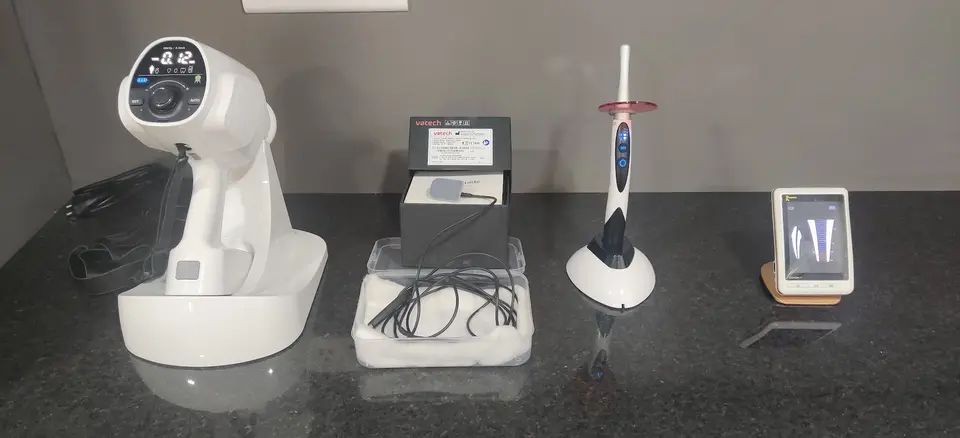
- X-ray assessment. A low-radiation digital X-ray is taken. If a wider view of the jaw (such as a panoramic X-ray) or a 3D scan is needed, the dentist will tell you where this can be done.
- Explaining the options. You are told whether the tooth should be watched, treated or removed, the possible risks and the recovery, and whether seeing an oral surgeon is advisable.
- Managing infection first. A badly infected gum may be treated before removal. The dentist will decide whether any medicines are needed.
- Removal. If the tooth is being removed at the clinic, the area is numbed with local anaesthetic and the tooth is taken out, with stitches if needed.
Aftercare and recovery
Recovery usually takes a little longer than for a simple extraction. Swelling and jaw stiffness are common and often peak around the second or third day. A cold pack wrapped in a cloth, held on the cheek for short periods, can help.
Follow the same first-day rules as for any tooth extraction: bite on gauze as advised, do not rinse, spit, smoke or use a straw on the first day, and eat soft food. Take only pain relief your doctor or pharmacist says is safe for you. Many people need a day or two of rest, sometimes longer after a surgical removal.
Contact the clinic if pain worsens after a few days, or if numbness of the lip or tongue continues long after the anaesthetic should have worn off. Go to a hospital emergency department if bleeding is heavy and will not stop, swelling spreads to the eye or neck, you develop a high fever, or you have difficulty breathing or swallowing. See emergency dental care for more.
Frequently asked questions
Do all wisdom teeth need to be removed?
No. Wisdom teeth that are healthy, cause no symptoms and can be cleaned properly are usually left alone.
Can my wisdom tooth be removed at the clinic in Ankleshwar?
Many wisdom teeth can be removed in a dental clinic under local anaesthetic. If the X-ray shows a complex position, the dentist will explain the options, which may include seeing an oral surgeon.
What are the risks of wisdom tooth removal?
Besides short-term swelling and stiffness, possible risks include dry socket, infection and, rarely, numbness of the lip, chin or tongue if a nerve is affected; this usually improves with time but can occasionally last.
Why does the gum around my wisdom tooth keep swelling?
A partly erupted wisdom tooth leaves a flap of gum where food and bacteria collect, causing repeated infection called pericoronitis. Keeping the area clean helps, but if it keeps coming back, removal may be advised.
Every mouth is different. The right treatment for you is decided only after Dr. Dhara M. Sudani examines your teeth and, if needed, takes an X-ray. This page is general information, not a diagnosis.