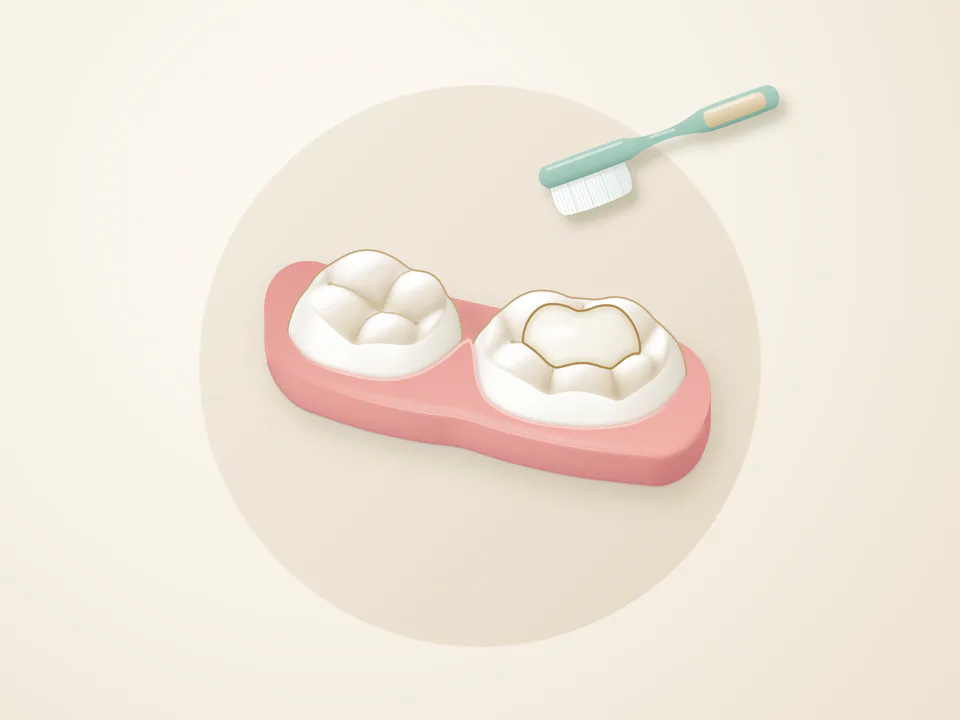
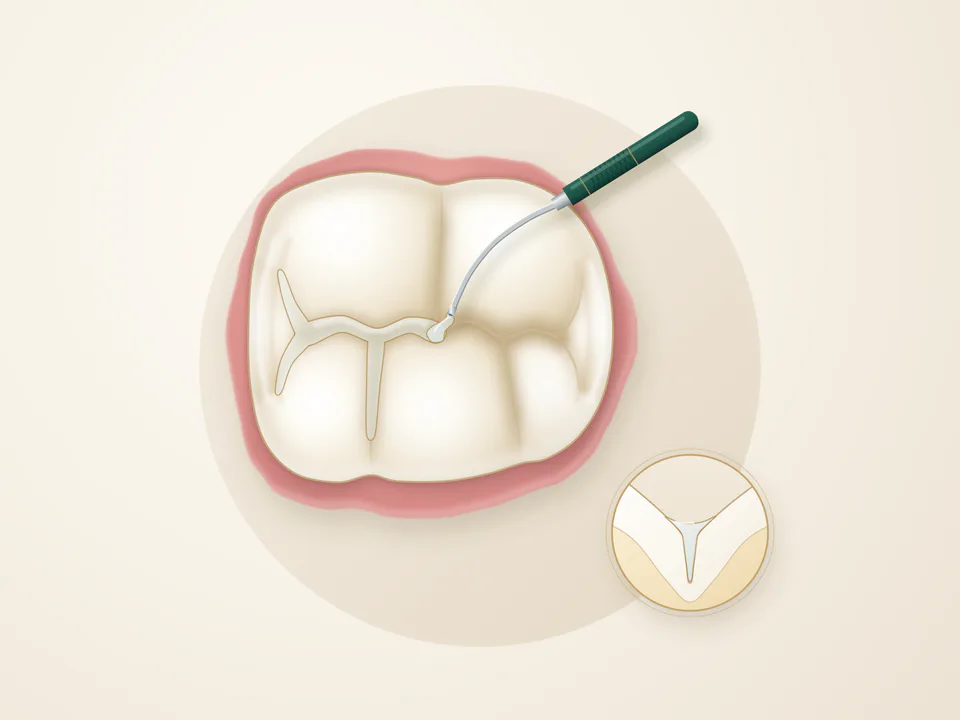
The chewing surfaces of the back teeth are not flat. They have tiny pits and deep grooves, called fissures, where food and plaque collect easily. Toothbrush bristles often cannot reach the bottom of these grooves, which is why many cavities in children and teenagers start on the biting surfaces of the back teeth.
A pit and fissure sealant is a thin protective coating that the dentist paints into these grooves. It flows into the pits and fissures and sets hard, leaving a smoother surface that is easier to keep clean and harder for decay to start on. At Divine Dental Care in Ankleshwar, the dentist checks your child's back teeth at their check-up and advises whether sealants would help.
What the treatment involves
Sealants are mainly placed on the permanent (adult) back teeth, especially the molars, soon after they come through, because the first few years after a tooth appears are when it is most at risk of decay:
- the first permanent molars usually come through at around 6 years of age, behind the last milk teeth, without any milk tooth falling out first
- the second permanent molars usually come through at around 12 years of age
Placing a sealant is quick. Usually there is no drilling and no injection: the tooth is cleaned, the sealant is painted on and it is hardened, usually with a curing light.
When sealants are recommended
The dentist may recommend sealants when:
- your child's first or second permanent molars have recently come through
- the back teeth have deep, narrow pits and grooves that trap food
- your child has had cavities before, or has a higher risk of decay
- the back teeth are hard to brush well, for example while they are still coming through
- a groove shows the very first signs of decay, such as a chalky or lightly stained area, but no hole has formed yet
A sealant is not a treatment for a tooth that already has a cavity. If decay has already made a hole, the tooth usually needs a filling instead – see dental fillings for children.
Benefits of pit and fissure sealants
- Helps prevent cavities in the deep grooves of the back teeth, where many children's cavities start
- Usually no drilling, no injection and no removal of healthy tooth
- Quick, often just a few minutes for each tooth
- Protects new adult molars during the years when they are most likely to decay
- Can help stop very early decay in a groove from getting worse
- May reduce the need for fillings later on
Preparing your child for the visit
Sealants are one of the simplest dental treatments for children, and a gentle way to get used to the dentist. Tell your child that the dentist is going to "clean and paint" their back teeth to keep them strong. Avoid words like "hurt" or "injection" – they are not usually part of this visit. Ask your child to brush well before coming. You can stay with your child during the visit.
How the treatment works at Divine Dental Care
- Check-up. The dentist checks the back teeth to make sure there is no cavity in the grooves. A low-radiation digital X-ray is taken only if it is needed.
- Cleaning. The chewing surface is cleaned so the sealant can stick well.
- Preparing the surface. Usually, a gel is placed on the grooves for a short time to help the sealant grip, then rinsed off.
- Keeping the tooth dry. The tooth is dried and kept free of saliva, which would stop the sealant from sticking.
- Painting on the sealant. The liquid sealant is painted into the pits and grooves.
- Hardening. The sealant is hardened, usually by shining a curing light on it for a short time.
- Checking the bite. The dentist checks that the sealant has set and does not feel high when your child bites, and adjusts it if needed.
Aftercare and looking after sealants
Your child can usually eat and drink as normal straight after the visit, unless the dentist advises otherwise. The sealed teeth may feel slightly different to the tongue for a day or two; this is normal. To help sealants last:
- brush twice a day with fluoride toothpaste, including the back teeth
- avoid chewing ice, hard sweets, pen tops or other hard objects
- keep sweets, biscuits and sugary drinks to mealtimes
- keep coming for regular check-ups
Sealants can wear down or chip over time. The dentist checks them at each children's dental check-up and repairs or re-applies them if needed. Tell the clinic if your child says a sealant feels rough or a piece has come off. To ask whether sealants would suit your child, book an appointment at the clinic in Ankleshwar.
Frequently asked questions
At what age should my child get sealants?
Usually soon after the permanent molars come through – the first molars at around 6 years of age and the second molars at around 12. The dentist checks when each tooth is far enough through to be sealed.
Does putting on a sealant hurt?
Usually not. Most sealants need no drilling and no injection. Your child may notice a sour taste from the gel and the cool air used to dry the tooth.
How long do sealants last?
Sealants often last several years, but they can wear or chip, especially if your child chews hard things. They are checked at every check-up and can be repaired or re-applied.
Do sealed teeth still need brushing?
Yes. A sealant protects only the chewing surface, not the sides of the teeth or the spaces between them. Brushing twice a day with fluoride toothpaste and cutting down on sugary snacks are still needed.
Are sealants safe?
Sealants have been used for decades, and dental associations such as the American Dental Association consider them safe for children. Some parents ask about BPA (bisphenol A): studies show that any exposure from a sealant is very small and short-lived – less than from everyday sources such as food and packaging. If you have questions about the material, ask the dentist at the visit.
Can milk teeth be sealed?
Sometimes. If a milk molar has deep grooves or your child has a high risk of decay, the dentist may suggest sealing it as well.
Every mouth is different. The right treatment for you is decided only after Dr. Dhara M. Sudani examines your teeth and, if needed, takes an X-ray. This page is general information, not a diagnosis.